The standard helps Innotrek to streamline its safety SOPs, raise programme quality across all sites, and increase client confidence
About the Company
Innotrek, established in 2002, is a leading experiential learning provider in Singapore, specialising in the design and delivery of large-scale school camps, leadership programmes, and corporate retreats. It works closely with schools, government agencies, and corporate clients to provide safe, high-quality, and values-based outdoor learning experiences.
How SS 710 Supports the Company
From mid-2024, Innotrek began implementing SS 710:2024 – Code of practice for outdoor adventure education (OAE) activities as the primary operational framework across its OAE activities.
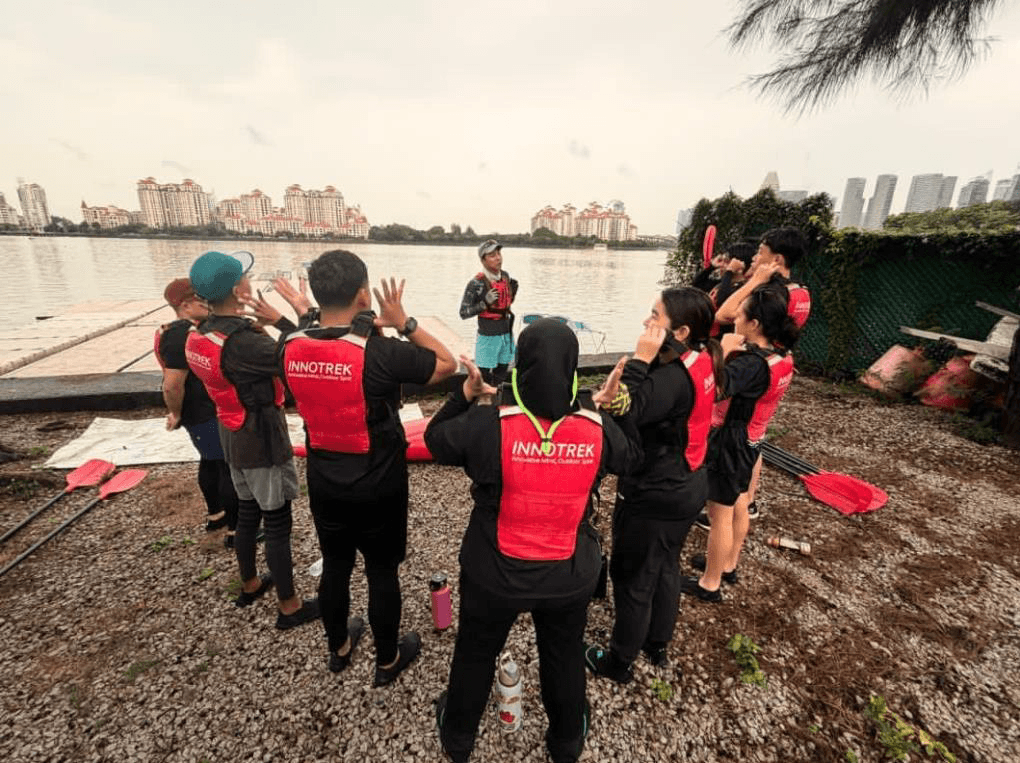
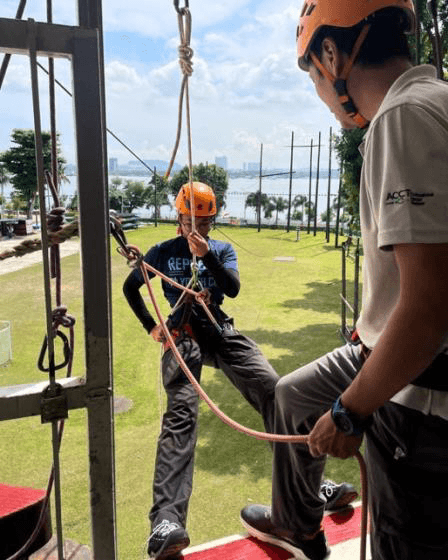
The company delivers over 200 programmes and serves up to 50,000 participants annually. It is also a trusted partner to over 60 Ministry of Education schools, ranging from primary to junior college levels. Innotrek’s OAE activities include challenge courses, hiking expeditions, watercraft activities, and abseiling and climbing. It currently employs a core team of 12 full-time staff and 200 freelance trained instructors.
Apart from providing a framework, SS 710 also sets out best practices that help OAE activity providers like Innotrek scale their programmes without compromising safety and quality.
Benefit #1: Implement Consistent Safety Procedures

Prior to adopting SS 710, Innotrek faced challenges in standardised documentation and safety procedures across various programme sites and activity partners. “Each location or partner had its own way of handling risk, staff competency, and incident reporting, making it difficult for us to maintain consistent monitoring and compliance,” says Ms Shima Ali, General Manager, Innotrek.
With SS 710, Innotrek aligned all programme SOPs to a single, robust framework based on the core planning principles in SS 710 — from programme aims and design to risk management and emergency planning. Ms Shima adds, “This strengthened our operational consistency and clarified accountability.”
The result is a 25% reduction in incident reporting time due to standardised forms and SOPs. SS 710 also enabled Innotrek to maintain consistent programme safety and quality even during high-volume periods, where it manages up to 1,000 participants per day.
Benefit #2: Reduce Incident Rates
“The key purpose of adopting SS 710 is ultimately to deliver safer OAE activities,” emphasises Ms Shima. Innotrek identified three improvements — drawn directly from the standard — that fostered a stronger safety culture in all its programmes.
First, the improved, centralised risk management plan that it rolled out across various sites helped to standardise and strengthen risk controls. Next, Innotrek enhanced competency verification to ensure activity leaders have the required skills and knowledge to carry out OAE activities safely. Third, the company improved communication of risks so teachers, clients, and partners share the same safety expectations. Together, these SS 710-aligned measures have contributed to an estimated 20% to 35% reduction in minor preventable incidents.
Benefit #3: Boost Client Confidence
With the growing demand from schools for higher safety assurance and stronger quality benchmarks, “we recognised the need to formalise and align our existing safety procedures with a national standard,” says Ms Shima.
Since implementing SS 710, Innotrek has seen tangible business benefits beyond safety improvements. Audit readiness and compliance documentation for Ministry of Education and school checks have become 40% more efficient, reducing overheads.
There are also measurable improvements in client satisfaction. Post-camp teacher feedback scored an average of 4.7/5 for “Safety and Professionalism” in 2025, up from 4.3/5 in 2023.
Ms Shima concludes that the bigger picture goes beyond compliance: “SS 710 will also help us better contribute to the Ministry of Education’s National Outdoor Adventure Education Masterplan, where we can shape future generations through safe, purposeful outdoor experiences.”
Quick List of Benefits
SS 710:2024 – Code of practice for outdoor adventure education (OAE) activities
- Implement a robust, standardised risk management plan
- Strengthen the design, planning, and management of OAE programmes
- Prevent injuries and fatalities, raise safety standards across all activities
- Improve operational efficiency and consistency
- Enhance programme quality, increase client satisfaction