
Urban Solutions and Sustainability (USS) Research and Innovation (R&I) Congress 2026
5-6 February 2026
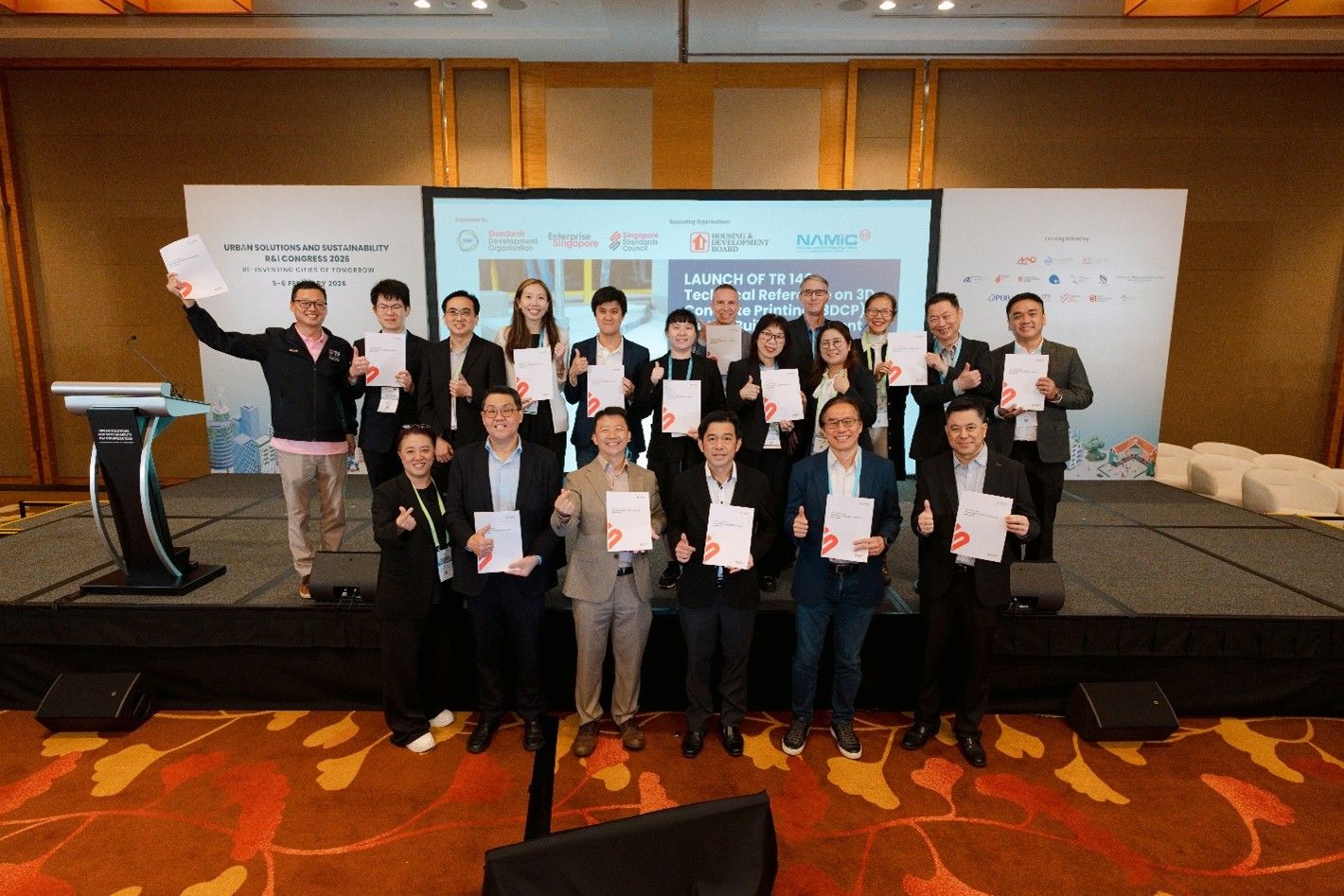
The Singapore Manufacturing Federation – Standards Development Organisation (SMF-SDO) launched TR 146:2025, the Technical Reference (TR) on 3D Concrete Printing (3DCP) for the Built Environment, at the Urban Solutions and Sustainability (USS) Research and Innovation (R&I) Congress 2026. This milestone represents a significant step forward in advancing the application of 3D concrete printing in Singapore’s building sector. The USS R&I Congress, co-organised by the Ministry of National Development and the Ministry of Sustainability and the Environment, was held on 5 and 6 February.
About TR 146:2025
TR 146:2025 provides practical guidance on materials, processes and operational planning, offering a clear pathway for the safe and scalable use of 3DCP in buildings and infrastructure.
Singapore’s construction sector is advancing with 3DCP projects, driven by evolving workforce needs and national decarbonisation goals. Key initiatives include the deployment of one of Southeast Asia’s largest 3D printers at the HDB Centre of Building Research, as well as the construction of Singapore’s first multi-storey 3D-printed house and the first on-site 3DCP childcare centre at Norwood Grand.
To support and accelerate the adoption of 3DCP, this TR consolidates best practices and provides standardised guidance for the built environment, setting a benchmark for innovation in construction.
Quick List of Benefits TR 146:2025 Technical Reference on 3D Concrete Printing (3DCP) for the Built Environment
|
Highlights of the Event
On 6 February, the second day of the USS R&I Congress 2026, Mr Tan Sze Tiong, Chief Sustainability Officer at HDB and Convenor of the Construction Additive Manufacturing Workgroup, together with Dr Yap Chor Yen, Director of the National Additive Manufacturing Innovation Cluster (NAMIC) and Deputy Convenor of the Workgroup, delivered speeches on 3DCP.
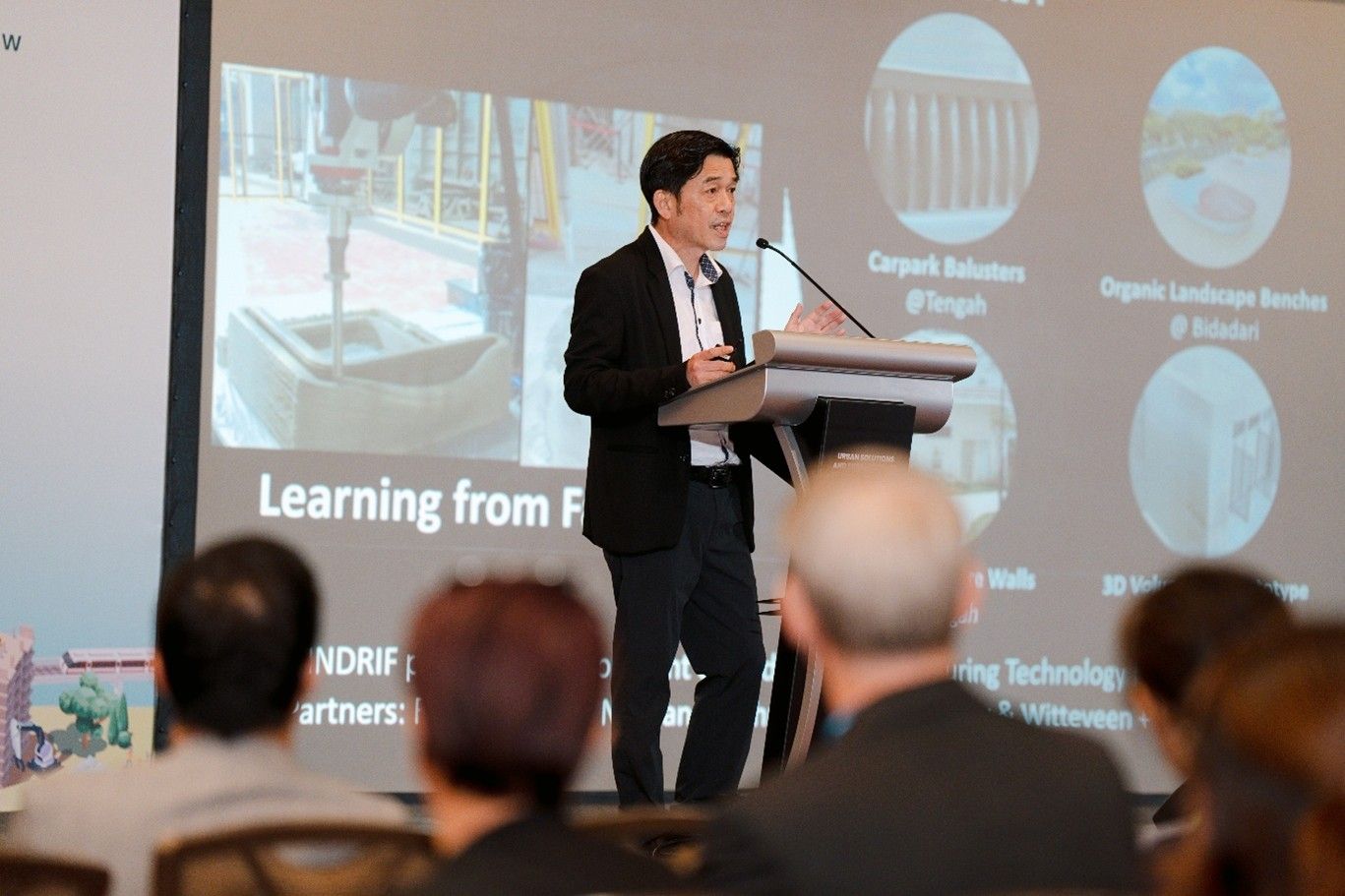
Mr Tan Sze Tiong highlighted that the TR on 3DCP was developed to provide practical guidance on materials, processes, and operational planning to accelerate industry adoption. He also shared HDB’s journey in 3DCP, the significance of the TR and how standardisation supports safe, efficient, and scalable deployment of 3D printing technologies for future-ready infrastructure.
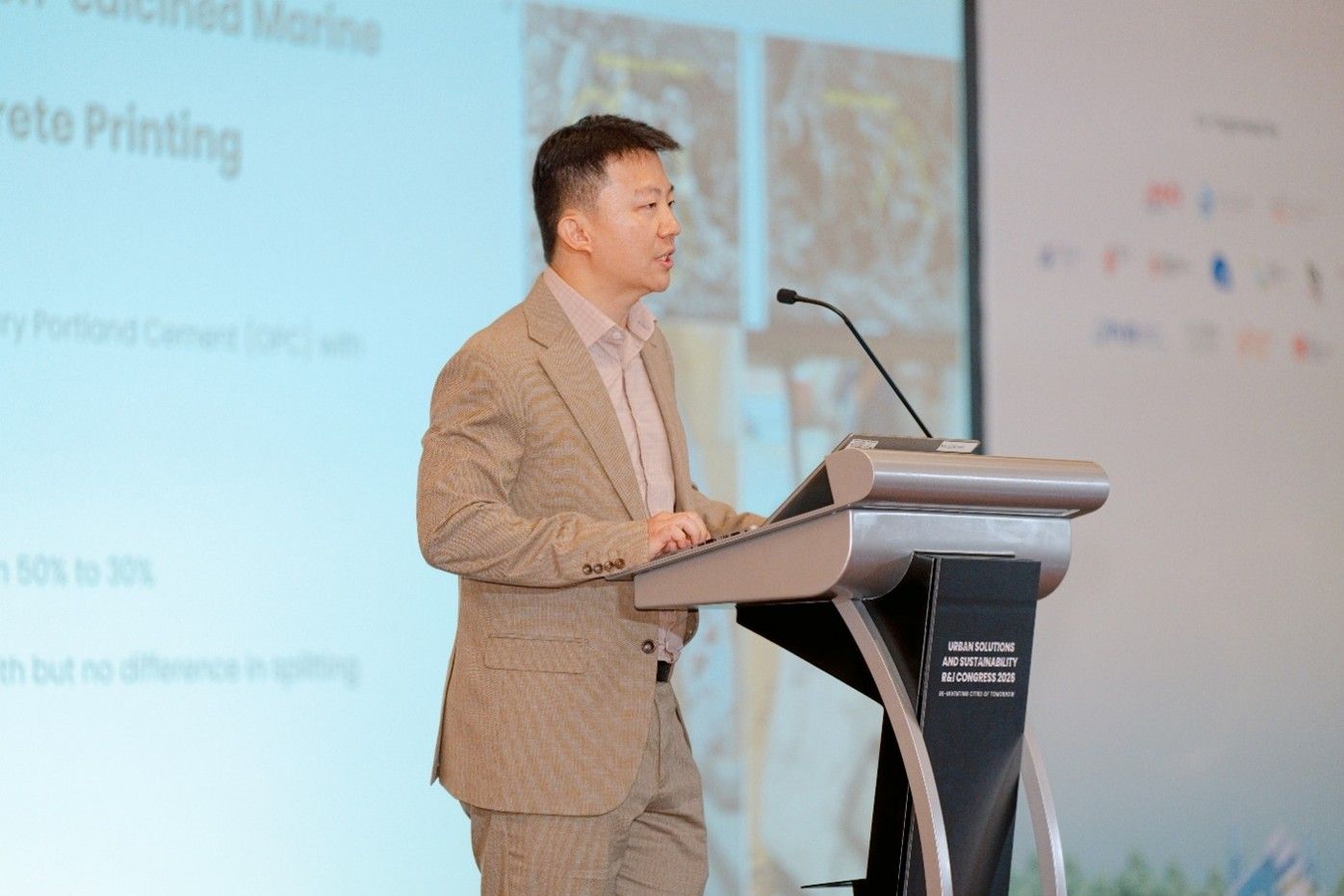
Dr Yap Chor Yen highlighted how 3DCP is transforming construction by enabling design flexibility, productivity gains, and sustainable practices. He introduced the TR on 3DCP as a practical guide for industry adoption and explained its role as a provisional standard on the pathway to becoming a Singapore Standard, and emphasised on how standardisation supports safe, efficient and scalable deployment of 3DCP in Singapore’s built environment. The session also covered material innovations from our local IHLs, including sustainable and cost-effective replacements for river sand and cement, and urged industries to tap on these innovations with agency support.
Pioneering 3D Concrete Printing: From Pilot Projects to Industry Benchmark
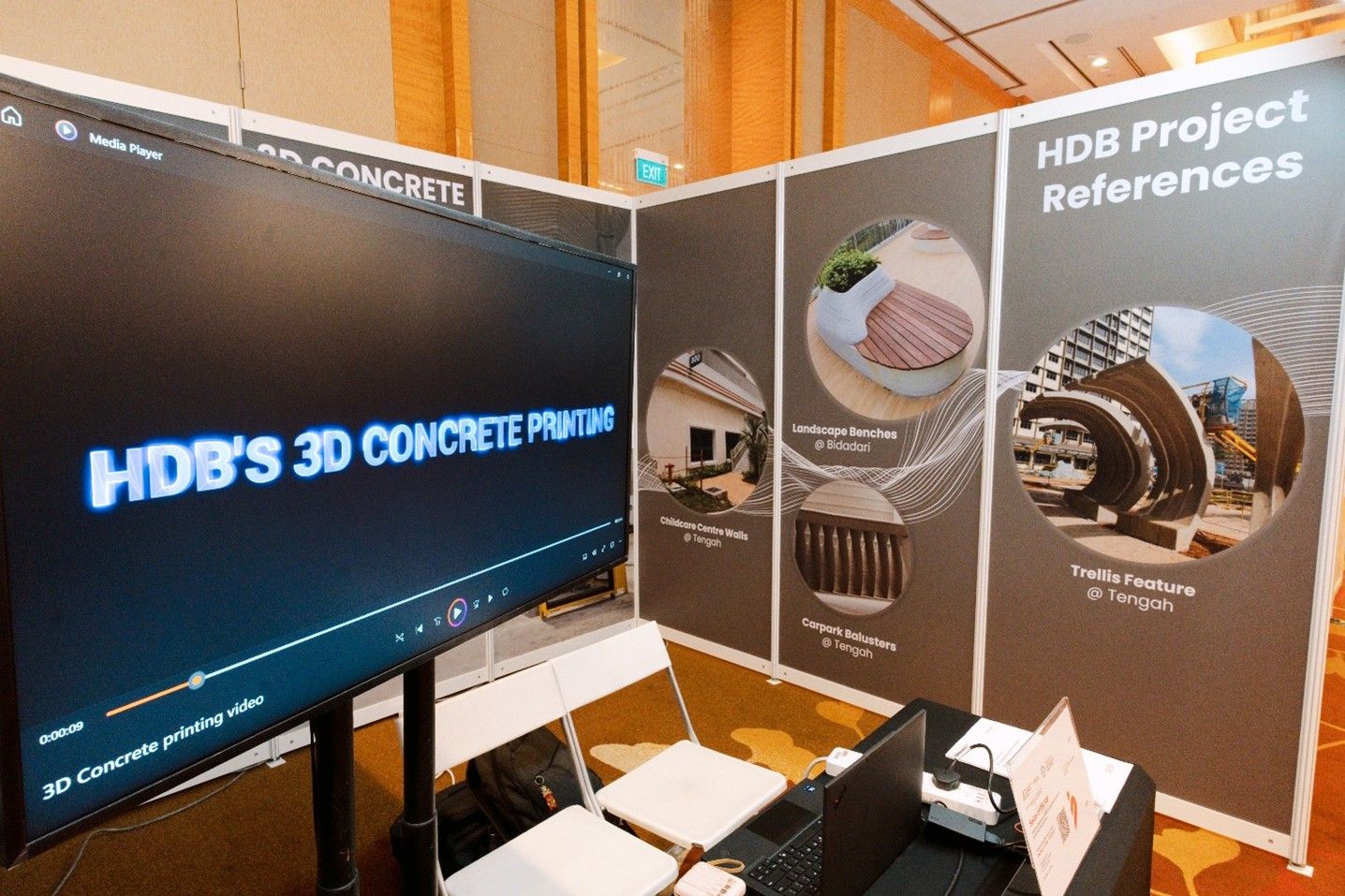
Over the past few years, HDB has leveraged 3DCP in selected towns, from landscape installations in Bidadari to façade walls in Tengah.
Building on these early efforts, HDB led the development of the new TR in collaboration with the National Additive Manufacturing Innovation Cluster (NAMIC), Enterprise Singapore, the Building and Construction Authority (BCA), Institutes of Higher Learning and industry partners.
TR 146 represents more than a milestone, it signals a shift in how concrete 3D printing will increasingly shape the Built Environment sector. By establishing a trusted framework for quality, safety and deployment, the technical reference empowers our industry to deploy concrete 3D printing for real-world implementation. This is also a step forward towards building a more sustainable and carbon-neutral construction sector, where strong partnerships across research, industry and the government will enable Singapore to enhance labour productivity and lead in next-generation infrastructure,”
Dr Ho Chaw Sing, CEO of NAMIC
As Singapore’s first TR for 3DCP, it provides construction companies with guidance on materials, equipment setup, design and construction methods, and practical applications of 3DCP. The collaborative effort sets a new benchmark for 3DCP and strengthens Singapore’s position in advancing construction innovation.
It’s no longer concrete thinking — it’s 3D printing for the buildings of tomorrow.
To learn more about TR 146:2025 or purchase a copy, please visit Singapore Standards eShop.